After a stroke changed her life, one longtime PHC patient reflects on finding stability, support, and connection through the people who kept showing up.
By: Patricia Perez, a client of PHC
My life day to day is kind of boring. I have a hard time remembering things now. Before, it wasn’t like that. I used to run the whole office, you know? I was an office manager at a cleaning company for about eight years. I could do everything—the computer, planning, thinking ahead. My brain was always working. Now it doesn’t. Now I forget what I’m doing sometimes.
My stroke happened in 2015. I was at work, and things just didn’t feel right. My boss had some medical background, and she told me I might be having a stroke. I said I’d go get it checked out, but when I got home, I didn’t do anything. I just didn’t realize how serious it was. I remember driving to work and feeling off, like I wasn’t all there. Then I sat down at my computer and… I didn’t know what to do. I couldn’t figure it out. That scared me.
So I drove home, which is crazy when you think about it, and I went to downstairs from my housing to Peninsula Healthcare Connection. I didn’t really know why I went there, I just knew I didn’t feel right. The nurse there saw me and drove me straight to the emergency room, in her car. If I she didn’t do that, I don’t know what would have happened.
Before all that, I moved around a lot. I was born in El Paso, Texas, but I grew up mostly in the Central Valley—Merced, Stockton, those areas. My family moved for work, farm work. I had two boys. When I got older, I needed to support them, so I left to find work. I went to Alaska for seasonal work. It was cold, but not bad since I worked in the kitchen most of the time.
Later, I came back and worked in Stockton. I got into office work through a friend, and that’s how I ended up managing offices. But I made some bad decisions too. Relationships, the people I was around. That’s part of why I left Stockton and moved to San Francisco. I needed to get away from that environment.
In San Francisco, I worked and lived on-site for a while. I managed another office there. I liked it. But the relationship I was in wasn’t good for me, and I didn’t follow that direction, so I ended up in a shelter. Shelter life… it’s not good. You’re not really moving forward. You’re just there.
Eventually, I made my way down to Redwood City, to Safe Harbor. That’s a shelter too. From there, someone recruited me for a job at a cleaning company, and that’s how I got back into working again. But it wasn’t stable. I made choices, had a boyfriend who didn’t work out, and ended up back in a shelter.
I also went to school at one point for accounting. I liked that. I was learning spreadsheets, computers, all of it. But I had to stop school because I couldn’t afford it. I needed money to live, not pay for classes.
When I moved to Palo Alto, I came into housing here through a counselor at the shelter. I didn’t have anywhere else to go, no family close by, and if I hadn’t gotten into this building, I don’t know where I’d be.
Before the stroke, I was working different jobs—camp work, events, things like that. I was already going to Peninsula Healthcare Connection for my diabetes. That’s how I knew them. Then the stroke happened, and everything changed.
After the stroke, I couldn’t do the things I used to do. My walking was affected, my memory, my thinking. I could still talk, but if I had to think of something specific, it was hard to get the words out. When I tried to go back to work, I couldn’t do the computer anymore. I couldn’t remember how to do my job. And since I was gone for so long, they had already replaced me. They wanted me to go back to cleaning, but I didn’t want to do that. So they let me go.
That part was scary. I didn’t know what I was going to do. I couldn’t just go get another job like before.
Peninsula Healthcare was there through all of that. They took me to the hospital in the first place. I was under the care of the nurse practitioner there when it happened. Afterward, they kept helping me—appointments, follow-ups, everything.
They also connected me to Street Team. I needed something to do, because I was just sitting around smoking cigarettes and doing nothing. Street Team gave me something to do. It kept me moving. It wasn’t glamorous, but it was helpful.
I’ve been coming to PHC for years now. It’s easy to go to the Opportunity Center. I know the nurses, the doctors. If I have a question, I can just go downstairs and ask someone, and they’ll help me figure it out. That’s big for me now, because I don’t always remember things or feel steady.
They’ve helped me with more than just medical stuff. They helped me stop smoking—I haven’t smoked in almost three years now. That’s a big deal. I smoked for a long time.
The care I get there is awesome. It really is. If it wasn’t for them, and Abode, and Drew… I don’t know where I’d be. I really don’t.
Drew helped get things going too. Like food programs, activities, ways to stay connected. He includes people. He gives you something to be part of. That matters, because I like helping people. That’s something I’ve always liked. Even now, I help my friend Darlene. She’s really sick, and I help watch her dogs, help her where I can.
We all kind of look out for each other here. It’s not perfect, but we try.
I’ve got anxiety now too, and balance issues, so I don’t go out as much. But having something to do like volunteering, helping people, that helps with that. PHC understands that. They’re sensitive to it.
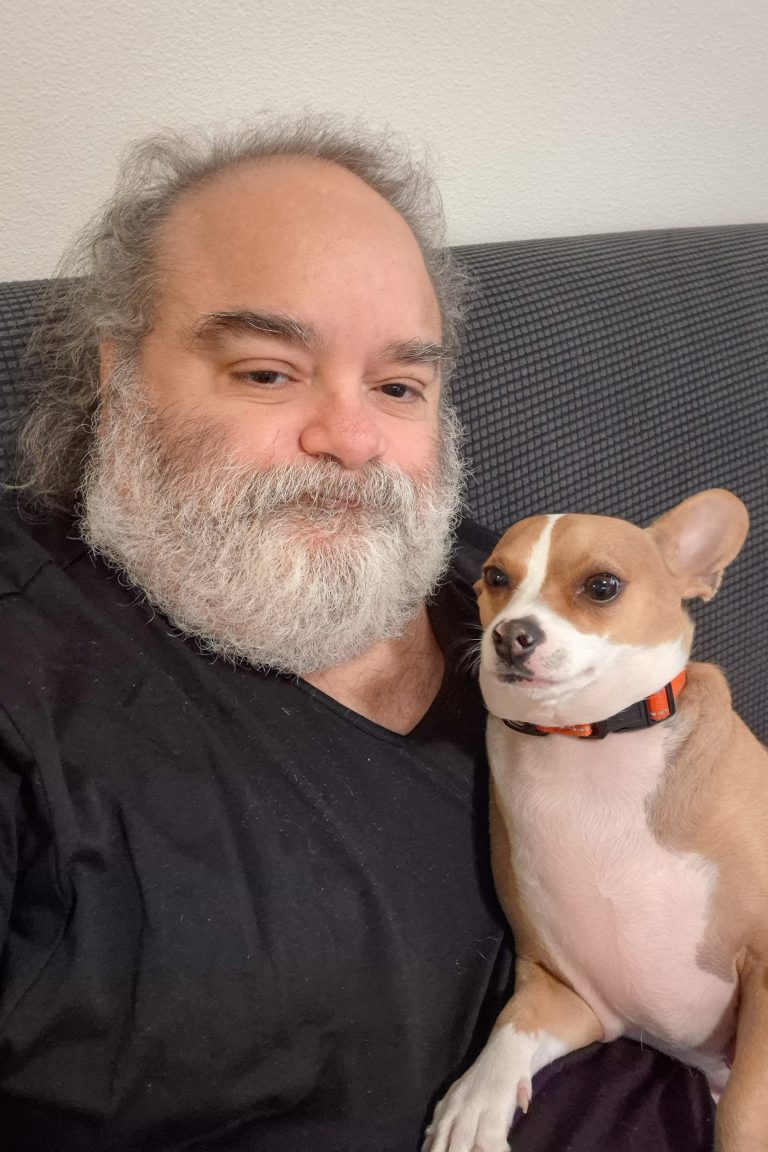
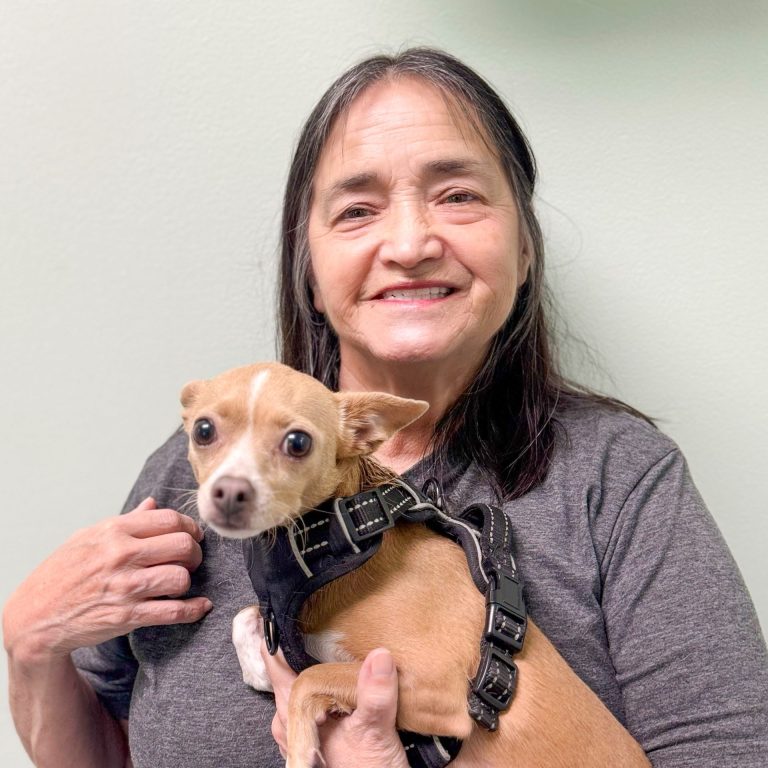
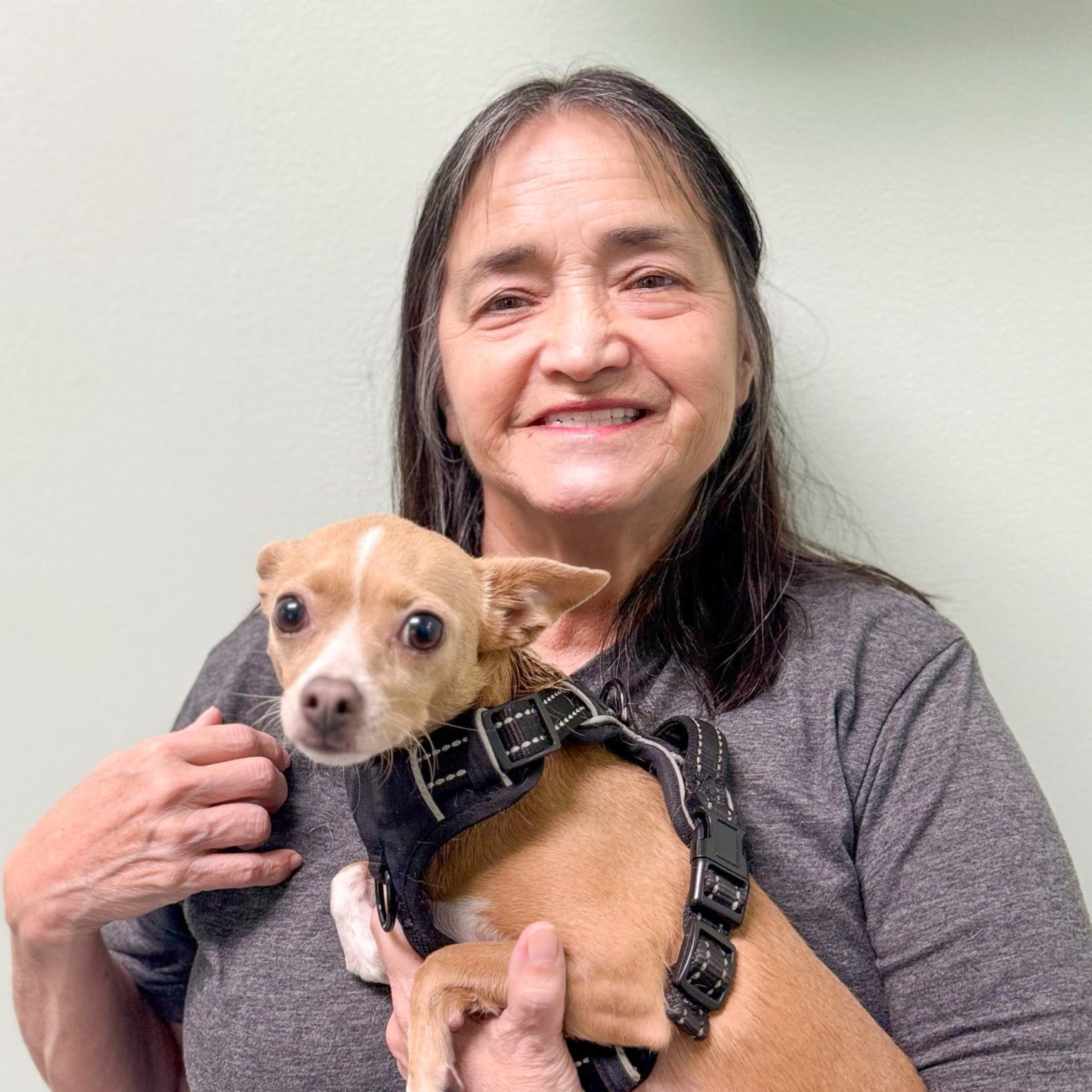
I’ve got my dog, Sissy. She’s my comfort. She helps with my anxiety. I do more because of her. She’s like my little baby. I got her from someone who wasn’t taking care of her, and now she’s with me.
When I think about everything, if these services weren’t here, I don’t know what I would’ve done. I really don’t. I didn’t have anywhere else to go. I didn’t want to go back to my sister’s because she has her own life, her own family. I like my independence.
Connection to me means having somebody there for you. Someone you can lean on, someone who supports you. That’s what PHC is. That’s what Drew is. They’re my connection to everything.
I don’t even know why I was asked to share my story. Maybe because I show up, I help out where I can. But it means something. It feels like comfort. Like somebody’s listening.
At the end of the day, I don’t know what I would’ve done without them. I really don’t. They kept me together.